Saturday, 6 November 2010

Raised Beds - To Dig or not to Dig

So many people are up at the allotment whenever the weather allows in this mild and wet autumn, digging and digging and no doubt suffering many bad backs along the way. I never have to seriously dig my plot! And neither do any plotters who have made raised beds for all their cultivation needs.

It seems to have taken the gardening fraternity a hugely long time to realise that the main reason for digging is to break up the soil compacted by continually walking over it in the first place. Classic books of my childhood such as Middleton's Gardening Guide (2/6d in old money or 12.5 pence in new - paid for out of hard earned pocket money!!) and Arthur Hellyer's The Illustrated Gardening Encyclopedia have no mention whatsoever of the technique of raised beds and both devote quite some space to telling the reader exactly how to dig, and double dig!

OK when we took over the plots originally they did need digging - to clear the area of the rough grass that was the initial field. I have described before in this blog how I laid out my plot in the first place, and this includes several raised beds - simply cut out of the plot by creating sunken paths in between. No need to buy wooden boarding at all. The beds are of a width that enables me to work them by reaching across from each side, never therefore having to tread on the soil itself. And along the paths I spread wood chippings that I have made myself from all my wood prunings saved throughout the year (having inherited a very useful chipping machine). This means I can walk along the paths and reach the beds in all weathers when other plotters cannot get on to their allotment for the mud! And weeds on the pathways are totally suppressed.

And this week I have been up there smartening the paths again, spreading more chippings and generally tidying up. Adding my own compost, fresh manure or rotted manure on top of the soil according to the planned use of the area next year helps to maintain the height of the raised beds above the paths and only needs a light forking in when I am ready to sew or plant or whatever. And harvesting roots etc loosens and works the soil with minimum effort. So - NO DIGGING!

Thursday, 4 November 2010

A Toad in the Netting

This warm November weather is quite amazing. Yesterday I spent several hours up at the plot generally tidying, weeding and harvesting, with just a thin tee shirt and summer weight trousers. I'm very glad I went up there because I found a toad caught in the netting around the brussel sprouts. He seemed exhausted from struggling to get free. I carefully disentangled him, gently put him amongst the strawberries where I knew I would not be working, and he seemed to recover well and crawl away beneath the leaves.
This summer I ran out of space for the courgettes, marrows and squashes, so I covered one of the paths across the plot with black cloth (the sort used to smother weeds) and piled manure onto it before covering the resulting heap with soil into which I planted the cucurbits. They thrive on this treatment - the heap becomes warm as it rots beneath the plants, and they are provided with a rich growing medium, which they love, and it doesn't dry out in the driest of summers. The benefit now at the end of the year is that I have a plentiful supply of well rotted manure which I am using to top dress all around the plot where needed - for example on the asparagus bed, around the flowers in the flower bed, and around the cabbages, sprouts, spinach, etc. which i am still harvesting.


I am well pleased with my handiwork. The plot is beginning to look very neat and tidy, ready for the quieter winter months ahead, and there is still an amazing amount of produce to see us through the next few dreary winter months.

Tuesday, 2 November 2010

a plate of vegetarian home grown food

How satisfying it was to sit down tonight to a plate of home grown vegetables, all gathered earlier today straight from my allotment, apart from the small spuds that were out of storage! (oh and the cheese on the cauliflower was actually from Sainsburys but everything else I grew myself).

Sunday, 31 October 2010

Self sufficiency


These photos show just how busy my allotment plot still is even at this time of year, when many around me have cleared their plots and started digging in manure before leaving fallow for the winter.
What a waste of space!
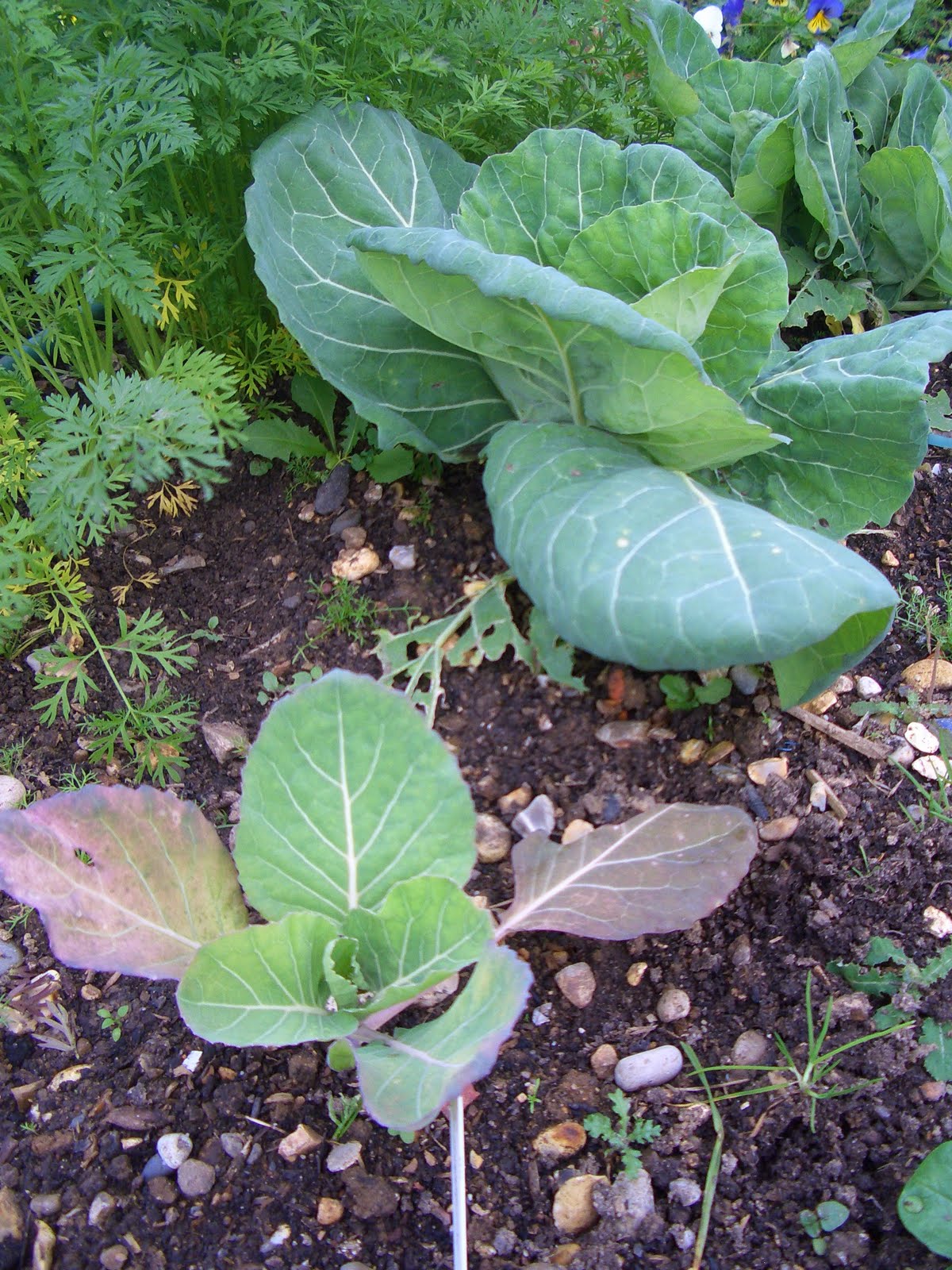
The brussel sprouts are swelling up well and we had our first meal off them last week, with many more pickings to come over the next month or so. By that time those spring cabbages will be ready for eating, and I have plenty of red cabbages to last all through the winter as well. We have already cooked plenty of red cabbage and frozen it for use later when other fresh vegetables may be scarce.
The lettuce is also growing well and providing some welcome winter salad.
And those carrots I sowed only 4-5 weeks ago are producing the first edible thinnings - with the promise of some lovely roots to follow soon.


But these are just a few of the vegetables I am harvesting at the moment. To add to the list are spinach, swiss chard, parsnips, beetroots, leeks, celeriac, jerusalem artichoke, and a little late fennel that the frost didn't catch! Not bad for a stony field that 3 years ago no one imagined would come to anything at all!

Monday, 27 September 2010

That Chelsea Chop - and Red Hot Pokers


I visited a beautiful garden yesterday and saw these wonderful Red Hot Pokers.


And this is what happens to Sedum plants when they are not given the Chelsea chop!!

Wednesday, 22 September 2010

Flowers Fruit and Herbs of the Bible No 3 The Bay Tree

Growing up as a little girl on a farm in Kent, we had a simply enormous Bay tree in our back garden. I was told that this protected us from lightning strike. But I can personally attest to the fact that this is simply not always true!
Nonetheless, Culpeper did write in the 17th century, although on what authority I know not, that:"neither witch nor devil, thunder nor lightening, will hurt a man in the place where a bay-tree is." OK, so we weren't hurt, so perhaps it is true. And we certainly never saw any witches, harmful or otherwise, in our garden!

This picture is of one of two bay trees I bought several years ago and as a pair they stand at the top of the steps leading up to the lawn. Soon, (but then I have been saying this for two long and doing nothing!) I shall start pruning and training them into those spherical blobs on spindly main trunks that you see in posher gardens than mine - ones no doubt where they have a gardener or bought them "ready made" at astronomical cost from a nursery. But i must do my own. I shall start by cutting off their top growing points at the desired height, and trimming all the side shoots to a requisite number of leaves ... and so on ... but that's a story for another day. I hope one day to be able to show you some success with this project.
For now we turn again to my biblical theme.
My tea towel tells me that the Bay Tree is mentioned in Psalm 37 at v. 35. But when I looked this up it refers simply to "a native green tree:"
"I have seen the wicked in great power,
And spreading himself like a native green tree..."
And the trusted commentary in the side margins that I have come to rely on tells me nothing more. So I have had to search further afield. How did the tea towel designer know this verse referred to a bay tree?
I have not yet found the answer, but I have found lots more fascinating facts about the Bay Tree, and will continue these in another post.

Tuesday, 21 September 2010

Flowers Fruit and Herbs of the Bible No 2 Rue and hypocrisy


"But woe to you Pharisees! (said Jesus to the Pharisees and lawyers as he dined with them) For you tithe mint and rue and all manner of herbs, and pass by justice and the love of God. These you ought to have done without leaving the others undone."
Luke ch. 11 v. 42

This is my rue in the garden - gone to seed and heavily cut back for the winter.

In Matthew Jesus is reported as saying something very similar to the multitudes and to his disciples:
"Woe to you, scribes and Pharisees, hypocrites! For you pay mint and anise and cummin, and have neglected the weightier matters of the law; justice and mercy and faith."
Matthew ch. 23, v. 23 - Jesus is saying that they have lost a sense of proportion in their spirituality, tithing small seeds but forgetting the major principles of morality.