Showing posts with label one year's seeding is seven years weeding. Show all posts

Wednesday, 2 May 2012

After the rain

Well it at last stopped raining for a while yesterday and I snatched an hour to go up to the allotment. The first potatoes I planted have come through, and I have earthed them up well - at the same time dealing with the abundance of tiny weed seedlings that covered the potato plot. This is one reason why potatoes are such a good crop to clean any weedy land. All the earthing up doesn't give  weeds a chance - and any that do survive are soon finished off by the shade of the maturing potato foliage.
The dandelions have had a field day - hundreds of flowers all across the allotments. I take the flowers off as I walk around, to make sure they are not given any chance to seed - one year's seeding = ten years of weeding. Oh how true.
The ground is really boggy on the plot after all this rain. I planted out some lettuce seedlings and sowed some spring onions, but had to give up because walking on such wet ground is not doing it any good.
  Not to do with the allotment at all - but just look at the progress on the banana plant indoors- wonder how many months before they'll be edible!?!

Monday, 5 September 2011

Autumn on the allotment part 2

Spent a couple of hours up at the allotment before breakfast today in lovely sunshine. I was anxious to get on with all the work still to do up there, because the forecast is not good for the rest of the week and already it has blown up breezy and it feels like rain is on the way.

So I picked the gorgeous yellow cylindrical courgettes, runner beans, french beans, spinach, raspberries, the small alpine strawberries (delicious but fiddly), and a small squash. There are still two rows of main crop potatoes to harvest, but with rain threatened now is not the right time. And the foliage still looks very healthy and not blighted (I buy blight resistant strains).

I pulled up the remaining radishes and put them on the compost heap. They have gone woody now - shame because the early ones I pulled were lovely, but they go woody and unpalatable very quickly. I sowed a winter cabbage in the soil thus vacated. Will have to remember to protect these from pigeons when they come through. The brussels sprouts I transplanted last week are doing well, although one had been badly eaten by slugs - so I scattered a few organic slug pellets around. It will hopefully recover - I think the growing point is still intact.

Then I carted 4 barrow loads of manure to the plot and spread it all around the perennials in the flower patch, between the rows of strawberries, and generally wherever there was any bare earth!

One year's seeding is seven year's weeding. I must do a big poster to put on the notice board up there. Looking around the other plots, I notice that people are making so much work for themselves, not pulling up the thistles, dandelions, chickweed, groundsel, etc etc that are now all flowering and seeding freely. It only takes a half hour or so to hand pull them all up and put them on the compost. That time well spent would save so much work and frustration later.
And of course the compost heap must heat up properly to kill those seeds, otherwise they are best burnt or taken to the local recycling centre instead. My closed wooden compost bins and plastic bins seem to make the best compost. People have made heaps out of wooden pallets, but they allow the stuff to dry out and not heat up properly so the compost is not so good and takes much longer to make!

Wednesday, 3 August 2011

compost and weeds

I've been up at the allotment again for a long session - still so much to do!
I wrote about weeds and seeds last time. As I walked around the other plots today I couldn't help noticing just how many are overtaken by weeds - and all in seed, causing no end of further problems - remember - one year's seeding, seven years weeding. It is so important to stay on top of them, using the hints and tips I gave last time. At the very least remove all those that are shedding their seeds to the wind and blowing across all your neighbours' plots! Golden rule - Never let weeds flower!
Today I cleared the cabbage patch - we have been eating wonderful cabbages over the last few weeks - and then covered the area with a liberal quantity of horse manure. It is not well rotted - quite a way to go in fact - but over the winter the worms and slugs and other bugs will do their work on it ready for a light forking over next year before planting potatoes there - as part of my crop rotation.
And then I emptied one of the compost bins and spread the wonderful crumbly rich compost (picture left) over any spare soil I could find around the plot - mulching the beans, in between the beetroots and radishes and courgettes, top dressing the asparagus bed etc. There were altogether about 5 wheelbarrow loads. And it won't take me long to fill the bin again - it has already received all those poppy plants from the other day and as I continue to harvest potatoes, there will be all the tops from those to add - and any weeds I pull up from day to day - and by this time next year I will have another quantity of compost to spread again!

My next job will be to remove the oldest strawberry row. It has cropped for 4 years and the fruit is getting smaller - so I will dig them all up and start a new row with runners from the other plants, and spread manure liberally around them before the winter sets in. Strawberries should be rotated in the same way as other crops. 

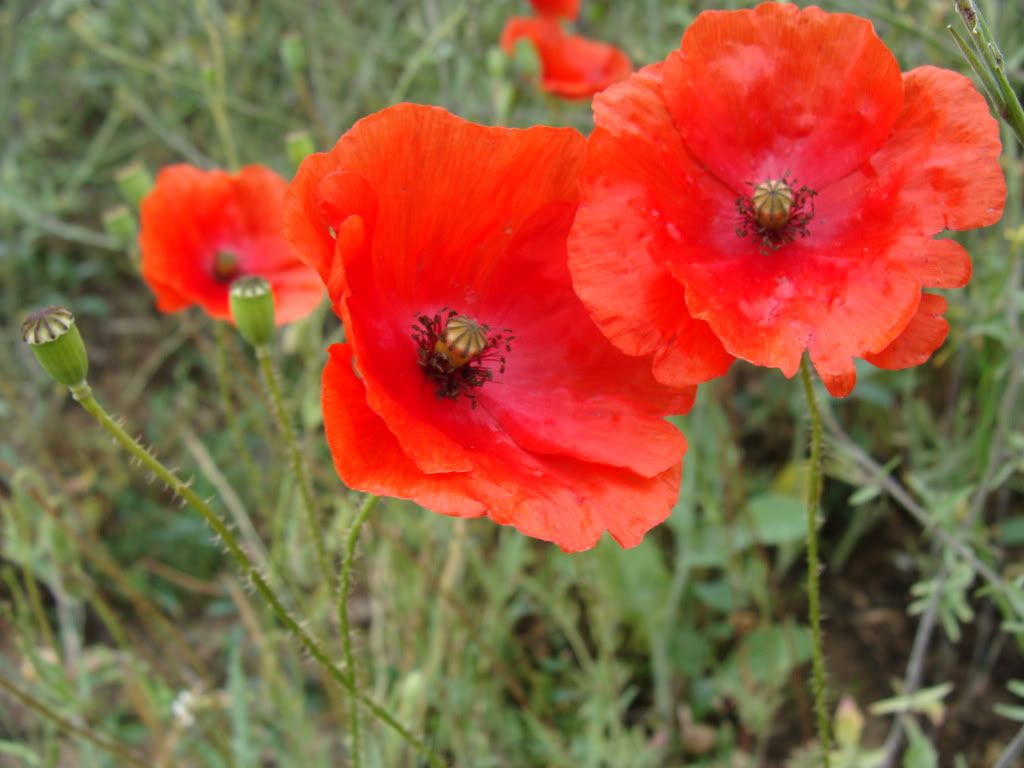
Photo right is of one of the poppies I missed the other day - but the seed head (fruit) hasn't ripened yet so it is not doing any harm. I must cut it off before it matures and starts scattering the seeds everywhere!
I do love them on the plot - and they encourage many bees and hoverflies - essential for pollinating and setting the peas and beans.

By the way, my wooden compost bins have slatted sides that can lift out to make removal of compost easier, and a thick "duvet" to cover the rotting plant material to keep the temperature up in the bin - essential for killing any weed seeds etc.and for optimum rotting potential.

Monday, 1 August 2011

Reaping rewards on the allotment - One year's seeding - seven years weeding

Autumn seems to have come early this year - but then we had our summer in the South of England in April and May and the weather has been wet and dull for much of the time since, until this week. 
And just when there is so much to do on the allotment, the temperature has soared to 28 or 30 degrees, especially up there where there is no shade at all.
My first and urgent job today was to carefully remove all the poppy heads, especially those that have ripened and are full of seeds, carefully collecting those into a bucket for storage and disposal elsewhere - not sure where yet. Anyone want a field full of oriental poppies that will appear year after year into perpetuity?!
One year's seeding is seven years weeding, and that is a wise old adage true not only of the poppy, but of many other weeds - chickweed, dandelion, teasels, groundsel, ragwort, scarlet pimpernel and many others. And once weeds like dandelions take a hold in numbers and get their deep perennial taproots down into the ground that spells double the problem. So keep on top of those weeds before they seed!!
Other plotters often ask me how I keep on top of the weeds, and that is one vital ploy. But there are other useful tricks:
1. Rotate a potato crop around the plot. The cultivation of these cleans up even the trickiest soil - by smothering everything else in sight as the plants grow, but also by means of the cultivation necessary - the digging, pulling out perennial weeds along the way, the planting, drawing up the ridges, digging up the plants for harvest, etc.
2. Do not rotavate the plot with a mechanical digger!! Yes I mean that! If you cannot manage digging by hand each year, then have raised plots of such a width that you don't have to walk over the soil at any time. Then a light forking over as necessary suffices. My observation of other plots that have been well and truly rotavated mechanically is that millions of weeds come up in no time at all and unless these are quickly removed, the plot is out of control in no time at all!
3. Plants crops a little closer than the recommended spacing - smaller crops result but more weeds are smothered.
4. If you have some bare ground between crops,either sow some "green manure" seeds like alfafa that are dug in before they seed, or cover with some old carpet or black polythene or, even better, lots of manure if you can get hold of it (unless you intend to grow root crops such as carrots on the plot afterwards - they won't like that.
That's enough for today - next time up there I need to do some harvesting, sowing, and emptying the bin that's full of ready- to- spread compost - so that I can start filling it up again!