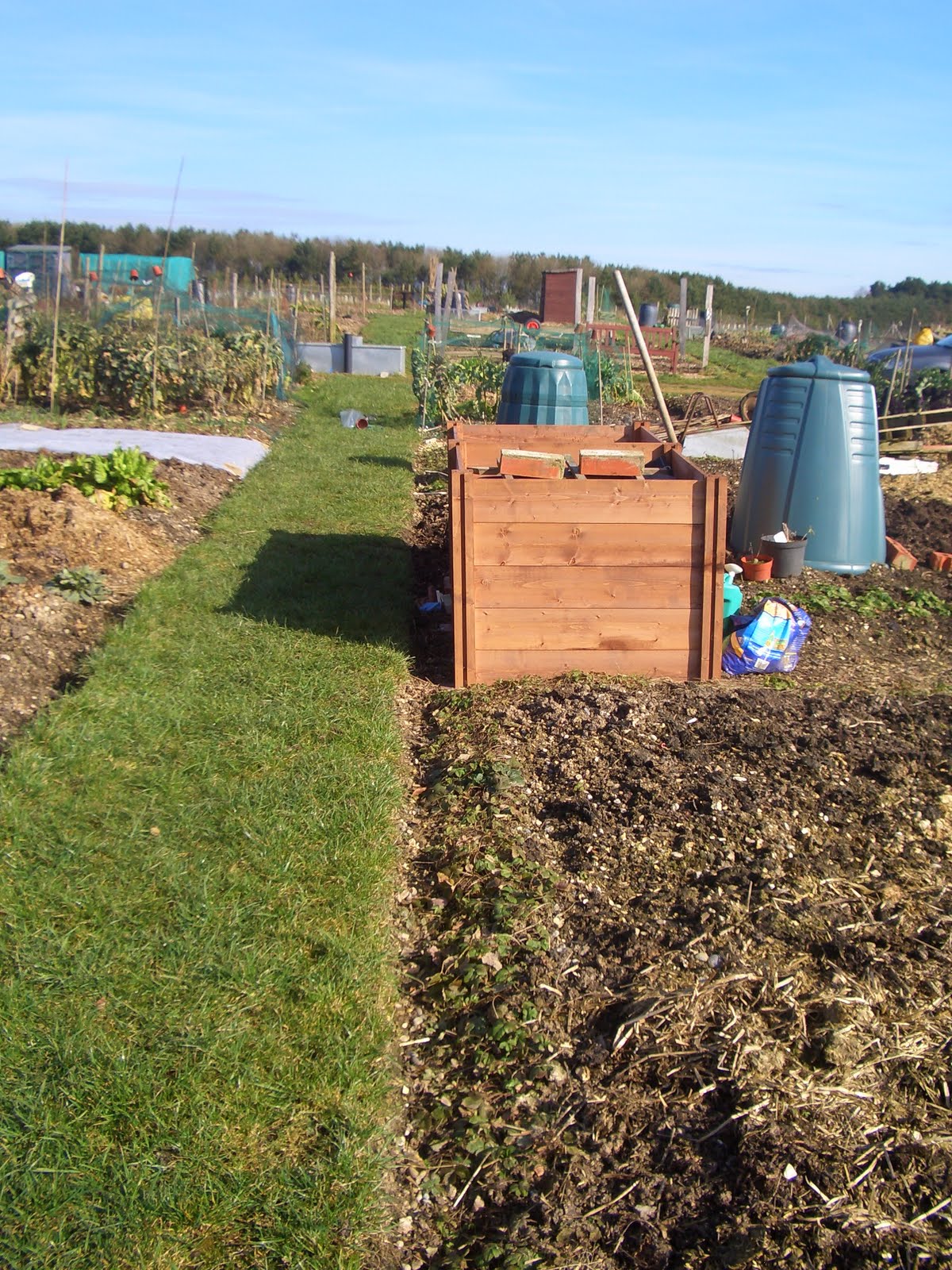
I’ve been so very busy over the last few weeks on the allotment – it seems I’ve totally neglected the blog!
As John Keats wrote in his ode To Autumn in 1820:
“Season of mists and mellow fruitfulness,
Close bosom-friend of the maturing sun;
Conspiring with him how to load and bless
With fruit the vines that round the thatch-eves run;”
My plot has certainly been blessed with a super abundance of crops – although the grape vine back at home has sulked this year after removing the dilapidated greenhouse that was falling down around it and leaving it to the elements of the English “summer!” So no grapes and no delicious grape jelly this year to grace our roast chicken and lamb at the dinner table.
But down at the plot I have been harvesting potatoes, courgettes, butternut squash, runner beans, spinach, swiss chard, summer cabbage, spring onions, strawberries (yes really!), autumn raspberries, beetroots, and some really pathetic tiny carrots. I just cannot seem to grow carrots – they don’t grow beyond the miniature stage – but with our predilection for miniature vegetables in our supermarkets, I can at least pretend I grew them that way on purpose!!

So the plot cannot be dug over and put to bed for the winter as other plotters are doing around me. My winter cabbages are growing well now, as are the brussel sprouts, hopefully ready for Christmas, along with the spinach and swiss chard, that only deep frosts will finish off. Not to mention the parsnips which are now swelling up. Unlike the spinach they will benefit from the first frosts – it improves the flavor!
But I have given all the grass borders a good mow and edged all around to make the plot look neat and tidy, and I have carted loads of horse and cow manure over to the plot. The latest delivery of horse manure is very fresh, so I have put it onto the overflowing compost heap. There it will rot down well over the winter, hastening the rotting of all the other material there at the same time.
All I need do now is keep an eye on the plot, ensuring pigeons cannot get at the brassicas, harvest as necessary, turn over the earth as it becomes bare and keep the weeds at bay.
 I have also been nurturing a rogue parsnip that decided to grow in the middle of the gravel and stone path across the plot - it was never going to be a prizewinner, given the "soil" it was growing in - but how about this!! Roasted, it will feed quite a few mouths!