Showing posts with label mulch. Show all posts

Sunday, 25 July 2010

Manure and compost


We are very lucky on our allotments to have an unlimited supply of horse and cow manure brought to the site by local farmers. This may be either straw or wood shavings based, and may be supplied in various stages of decomposition. We have just had the latest load delivered and as I gradually clear the crops, I am busy stockpiling barrow loads onto the bare earth ready to be spread and dug or forked in over the autumn and winter. A thick layer over the soil at this stage will keep any weeds at bay, and once dug in it also really helps to break up the heavy clay soil, improving its texture and drainage, as well as supplying plenty of nitrogen for healthy crops next year.

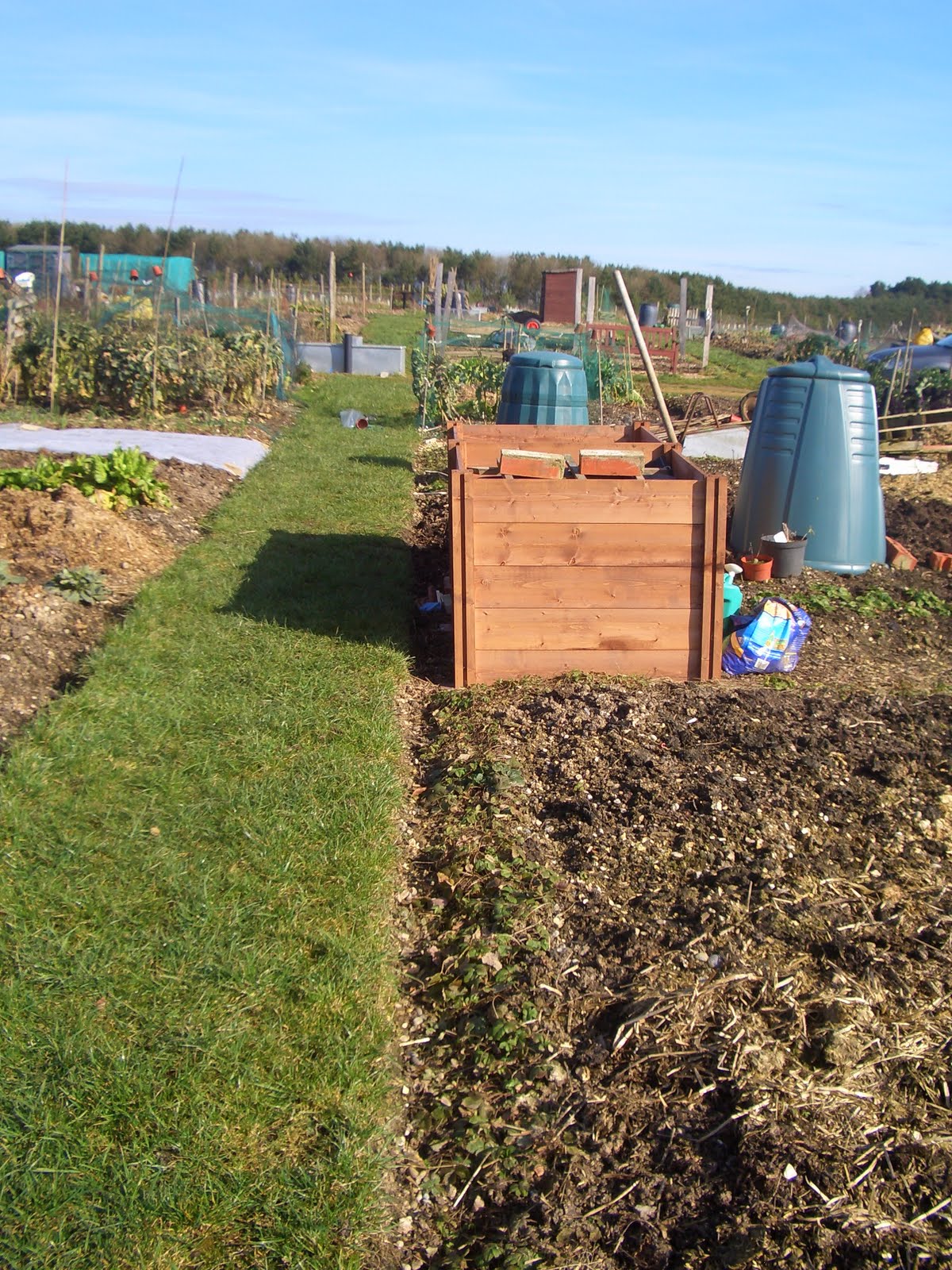
I also compost all plant waste on the site. Here you can see my two green plastic bins, and the two wooden compost containers, that are filled in rotation. By the time the fourth container is filled to the brim the first container will have produced beautiful sweet smelling, fully rotted compost, that will be fine and friable to the touch and can be spread across the allotment.

The plastic "dalek" bins are OK, but the very best compost is being made in the two square wooden bins. I bought them from The Recycle Works, they are very easy to construct from the flat packed wood, and I am delighted with the first compost from them.

Like many other "plotters" I started with a compost bin made from old wooden pallets, tied together with string at the corners - very rough and ready! These seem to be very popular - presumably because they are cheap - but they do not make good compost; there is too much ventilation, the material dries out too readily and does not heat up sufficiently to complete the decomposition process.


Wednesday, 7 July 2010

Hosepipe ban


Today the North West of Britain has a hosepipe ban introduced. This means the inhabitants can fill their swimming pools and ponds with a hose, but cannot water the garden with sprinklers and the like.

Here in the South East of England we have no ban as yet, but all my garden water butts, and I have quite a few, are all empty or nearly so. I have resorted to lugging my bath water downstairs to water the flower gardens. I wonder if my flowers appreciate the "stress reliever" bubble bath, the "pamper and nourish your skin" bubble bath or the "aching muscle relief" bubble bath - the last named has been used rather a lot lately! I only use these on flower beds and my home made compost only goes back on those beds, so I do not worry about the possible tainting with chemicals that may ensue.

I have always resisted watering on the allotment, apart from when plants are establishing themselves. I have been of the view that there is plenty of water deep in the soil and that the plants should be left to their own devices to find it and not encouraged to be lazy! But clearly this cannot apply to shallow rooted plants, such as radish, and other roots, including particularly celeriac, which is notoriously difficult to grow well in a dry summer.

This year all my best principles have gone out of the window. The strawberry plants have wilted, the potato crop is threatened, the lettuces are slow getting going, the celeriac are standing still and not growing at all, in short most of the crops desperately need more water. So every other day or so I give them all a jolly good soak. This is far more satisfactory than giving everything a dribble every day. And after watering, the straw in the farmyard and stable manure, spread around the plants, is acting as a jolly good mulch, helping to conserve the water for the plants rather than letting it evaporate and go to waste.

PS Note the organic slug pellets. I will never use non organic pellets on the allotment.

Saturday, 3 July 2010

In the beginning...

Here begins the story of my vegetable plot.
Three years ago, in winter 2007/2008, I became the proud lessee of a patch of ground in the middle of a grassy and oh so stony field. I had walked over the field earlier in 2007, when negotiations were progressing between the potential landlord and our allotment association, and it felt like I was walking over a kind of gloopy sinking mud, and that any moment this awful stuff was going to part me from my wellington boots.

There were no worms to be seen in the soil, and no birds in the air above us. It seemed a pretty barren field. But most of us were undaunted by such an unpromising start!

Our wonderful committee not only marked out our plots but gave them all a very rough dig with a rotavator. We were also lucky to have an unlimited supply of cow manure from a local dairy farmer. So that first winter the wise amongst us put that manure to good use and covered our plots with it - barrow load after barrow load of this stuff was carted across the field to our plots, and spread thickly, to be left to rot down over the winter months.


....and what a difference this thick winter manure dressing made! Those few who for whatever reason had not heeded the advice of our chairman and had not taken advantage of the freely available mulch found that, come the spring of 2008, their plot resembled a badly overgrown lawn - thick matted weeds and grass - well let's face it, an arable field. Not so much of a surprise there, but some budding gardeners never really caught up after that, and appear to still struggle to keep their weeds at bay.

As the old saying goes, one year's seeding is seven years' weeding. How very true.


Whereas those of us who had worked so hard in the winter cold that first year were handsomely rewarded. Sorry if I sound smug:

I even planted a few flowers - primulas - in the muddy cold clay - as a harbinger of that first spring that held so much promise for us all.

And the all important compost bin had high priority - seen in the distance. I made mine rather inexpertly from wooden pallets and string (!), but later we shall see, perhaps unsurprisingly, that it did not survive for very long.

I cannot remember why I covered part of the ground with fleece at that stage. Obviously I wanted to warm the ground for something, but goodness knows what!

My allotment had got off to a promising start.

In later posts I shall chart progress - how I marked out the plot, and why, the mistakes I made and the triumphs, the tears and the fun of it all, the camaraderie and the bleaker moments when thieves broke in. There is so much to tell.

And the rewards are huge. This last few weeks I have picked 50 or 60 pounds or more of the most delicious strawberries - they have been frozen, made into crumble with rhubarb, consumed fresh in vast quantities at every possible opportunity, and given away to all and sundry. And they have seen no nasty chemical pesticides to taint them. They are pure and as far as possible organic. And that is a huge bonus!